
Reducing the CO₂ footprint of transport isn't about finding one perfect global technology. It's about matching the right solution to each market's energy reality. That is how Rodrigo Chaves, CTO R&D and Board Member at Volkswagen Truck & Bus (VWTB), approaches the shift to lower emissions. From a career that began at the Brazilian Navy Research Institute to leading powertrain development across TRATON in Sweden, Chaves has spent nearly three decades turning technology into real-world impact.
Today, drawing on Latin America's deep experience with biofuels and its growing electric fleets, he is helping shape a pragmatic, energy-matrix-led path to CO₂ reduction – one where biofuels, electrification, and hybrid solutions each play their part.
What drew you into Research & Development (R&D), and how has that motivation evolved?
I started at the Brazilian Navy Research Institute, working with what we then called AI technology: control and automation systems for submarines. When I joined Volkswagen in 1997, it was a big challenge – the company was restarting its plants after the end of its joint venture with Ford, and we had to rebuild everything. Over the years I worked through many areas – project management, R&D. Working in the transportation sector means we can influence how people live and promote better social development. My leadership motivation grew very much in the idea of purpose – empowering our teams with clarity, autonomy, and direction, because a good innovation landscape needs people who feel trusted and connected with a bigger aim.
What did your experience at the group level at TRATON teach you, and what did you bring back into VWTB?
That was a great time. When I joined the TRATON GROUP, I had the chance to live in a completely different culture and move to Sweden with my family. I was engaged with a group responsible for creating the holding, starting with the R&D and projects. Back in 2016, we had three companies – Scania, MAN and Volkswagen Truck & Bus (back then still called Volkswagen Caminhões e Ônibus) – and we needed to create a common ground where all the teams could be connected, could trust each other, could contribute in a positive manner.
It took a while, and it was really a lifelong learning experience: how to steer this team, how to be open, how to create a trustful environment where the best of the three companies would unleash the possibilities to create the best technology solution for TRATON.
I was responsible for powertrain, working with the Swedish and German colleagues. We developed the future powertrain with the strongest units – after-treatment, electronics – and we took a major step with the first TRATON propulsion system and the batteries. During these three years, we started from a blank sheet of paper, but we had a common goal: to create a positive impact, to exchange, to learn with each other. In the end, the differences – when we combine them in the right way – can really make us stronger.
.jpg "IMGL9444")
When I came back to Brazil, I felt the potential of our group. Working with another company, the way we interact with suppliers, leveraging different cultures and backgrounds – it's really an asset. If we use that wisely, our potential will be super. It changed my behavior and my way of thinking, and I really encourage other managers and colleagues to try such an experience, because we need this group thinking. Not trying to have one culture prevail over the other but creating a place where everyone can contribute – and out of these differences, we create our common culture of TRATON.
You brought that group mindset back to Brazil. How does it shape the way you approach decarbonization in Latin America?
Here in Latin America, we have a lot of alternative energy sources with potential for lower emission, and a background and lifelong experience with the use of biofuels. For passenger cars, we have ethanol technology and flex-fuel, where you can mix ethanol and gasoline – this was in a time when decarbonization was not even discussed. We were already searching for that possibility, looking at our energy matrix and trying to figure out the best use of those sources to make the most efficient transport solution and contribute to better air quality.
Based on the Brazilian biofuels program RenovaBio (an initiative of the Brazilian government), which is based on the methodological framework of international Life Cycle Assessment (LCA) standards (ISO 14040 and ISO 14044) and the IPCC guidelines, with certain biofuels, you have a real possibility to reduce lifecycle CO₂ emissions – compared with regular fossil diesel, by up to 90%, depending on the feedstock and production process.
In our region, we have a very strong agribusiness structure. Soybean and other feedstocks that can be properly used as biofuel are there. Biomethane is another biofuel with a lot of possibilities – starting from agribusiness, but also in garbage and refuse collection, where operators can benefit from a source with lower carbon intensity compared to fossil alternatives: You can use the existing technology before going to electrification and promote a great reduction in CO₂, from 80% to 90% depending on the type of biofuel.
At the same time, in the big cities the density of people is very high. We have a social demography that really needs better air quality and conditions like lower noise emissions, and there you also have a much better electric infrastructure compared with the countryside. With the existing battery technology and overnight recharging, you can make a very comprehensive operation with electric trucks and buses to transport goods and people in the city – a shorter payback time and a very positive impact, because you emit zero tailpipe emissions. This also contributes positively to local public health: less disease and issues related to air quality, and a quieter transport solution.
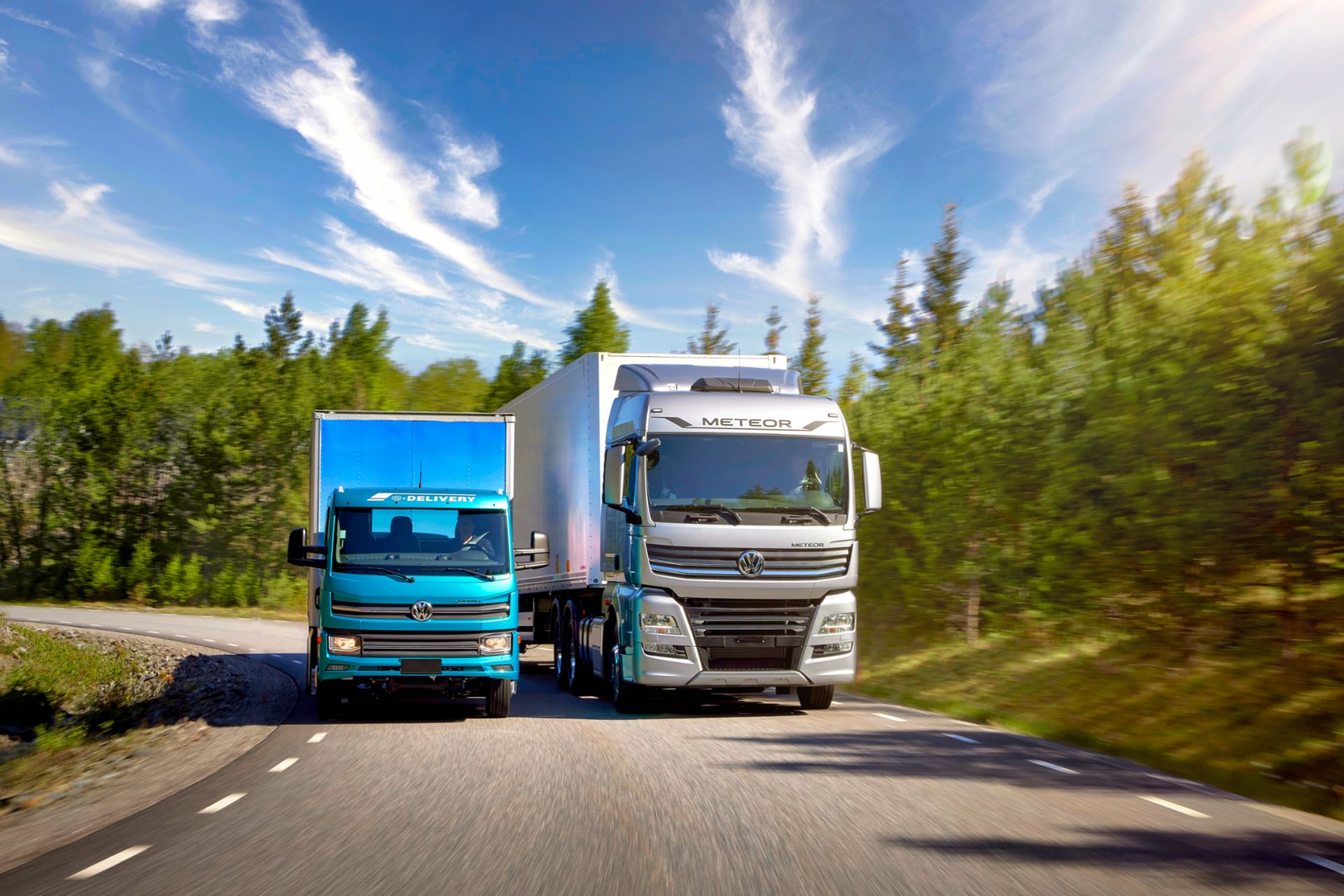
That's the reason we were the first in the TRATON GROUP to develop and go into production with our e-Delivery, the light-duty truck. We launched it in 2020 – the first electric truck from TRATON to go into production. Now we also have very successful development and great customer feedback from the electric buses. We're very well positioned today for city applications – last-mile and public transport – with these electric truck and bus platforms. For long-haul in our area, electrification will take some time to develop in terms of infrastructure and fast-charging stations, so we believe it will be a transition, with a possibility for hybrid solutions. But we always start with the energy matrix and the possibility to deliver the best results for the customer, the environment, and society before we select the proper technology. The way we are approaching this is a multi-solution approach – with a very strong focus on biofuels and electrification, and also a combination of both depending on the application and the market.
Can you share a recent example of group collaboration in R&D that worked well?
Yes – a new global heavy platform that is a result of the TRATON Modular System. All the global requirements are being collected, with a lot of discussion on properties and cost. Each brand takes leadership on specific matters. In our case, we have the ability to make good cost-optimized solutions. MAN and Scania have deep know-how in technology development, vertical integration, and aerodynamic efficiency, and our US colleagues contribute strongly on customer centricity. Every big journey like this brings not only technical but cultural challenges – matching four different points of view isn't easy, and it takes time. But walking a mile in the other's shoes, I'm sure we'll find a way. This team will be unbeatable.
Rodrigo Chaves
CTO R&D and Board Member, Volkswagen Truck & Bus
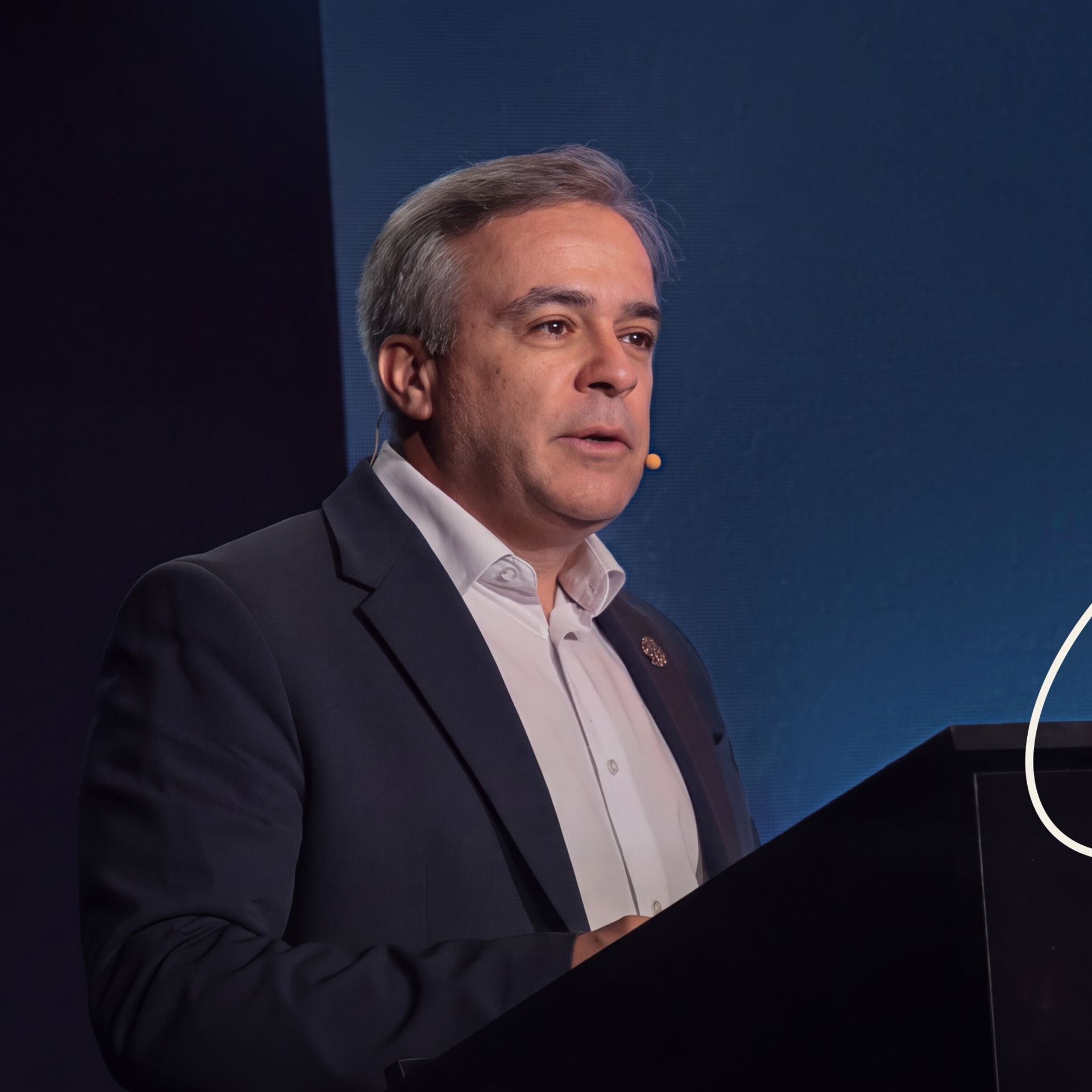
We had a common goal: to create a positive impact, to exchange, to learn with each other.
Facts
-
Electronic Engineer and M.Sc. in Electronic Controls and Modeling (UFRJ)
-
Began his career at the Brazilian Navy Research Institute, working on AI and control systems
-
Joined Volkswagen Truck & Bus in 1997, moving through Project Management, Powertrain, and R&D
-
Led Powertrain, Controls and E-Mobility at TRATON in Sweden (2016–2018)
-
Today leads R&D as CTO, driving Volkswagen Truck & Bus's multi-solution CO₂ reduction strategy
-
Champions a technology-open approach to CO₂ reduction, tailored to each region's energy sources and market conditions


