How Patricia Acioli Turns Community Action into Sustainability Strategy at Scania Brazil
Disclaimer: This page and the documents, information, data and assessments contained herein reflect the factual and legal status as well as the corporate strategy at the time of their publication and/or for the time period specified. They may since have become outdated as they are not being updated.
At TRATON, sustainability is a shared purpose. Impact Lines reveals how TRATON’s people bring this purpose to life, turning sustainability goals into tangible impact across every brand, every system and every line of work.
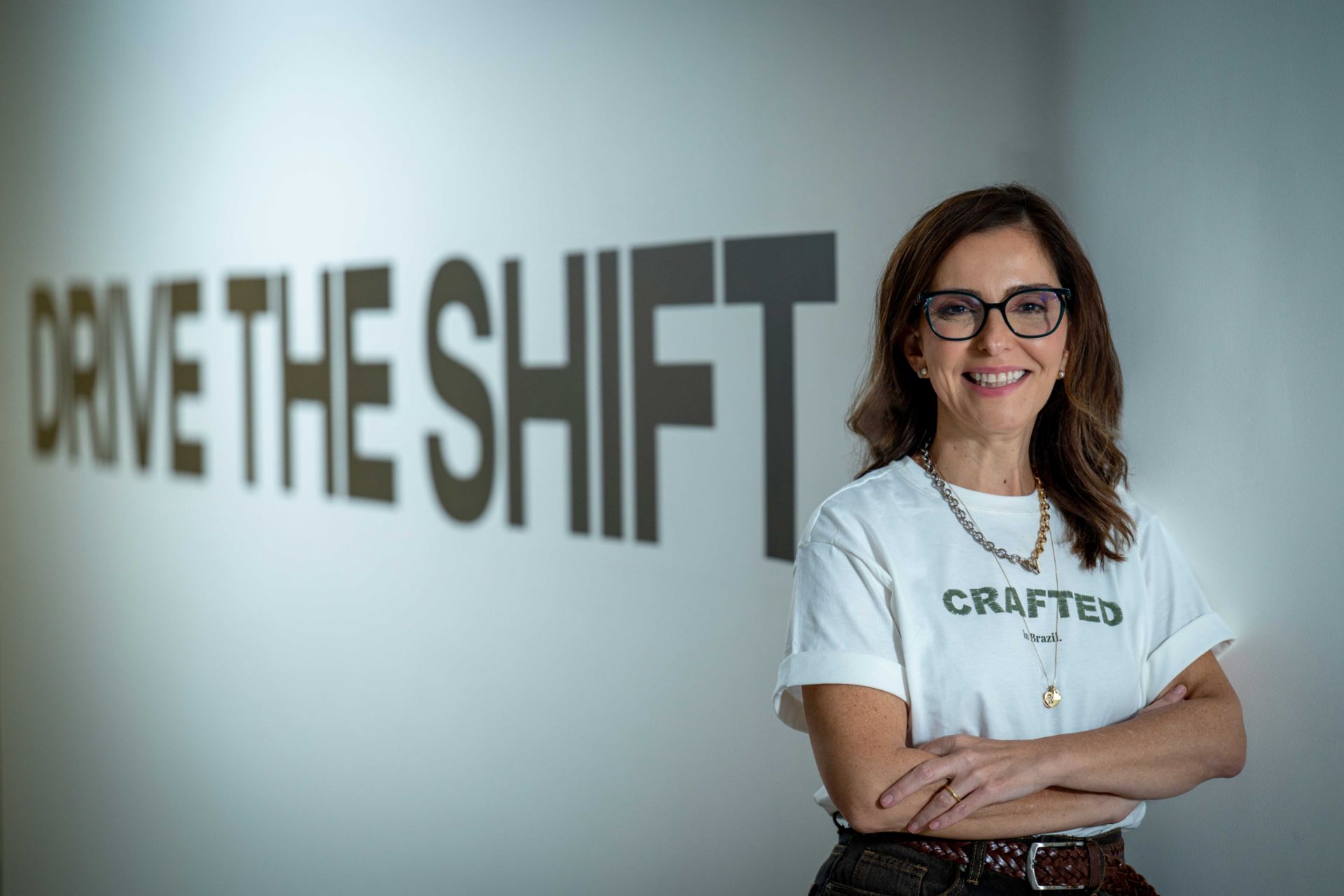
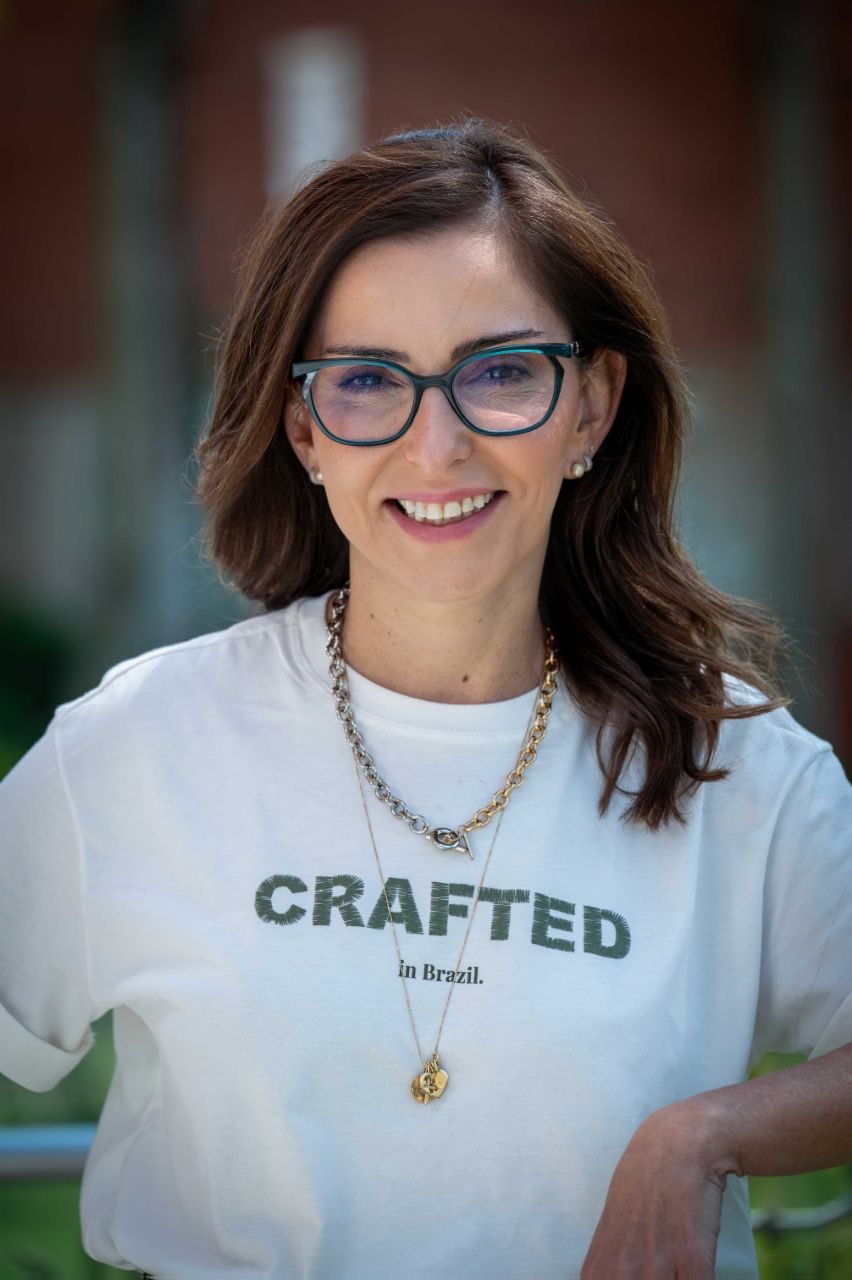
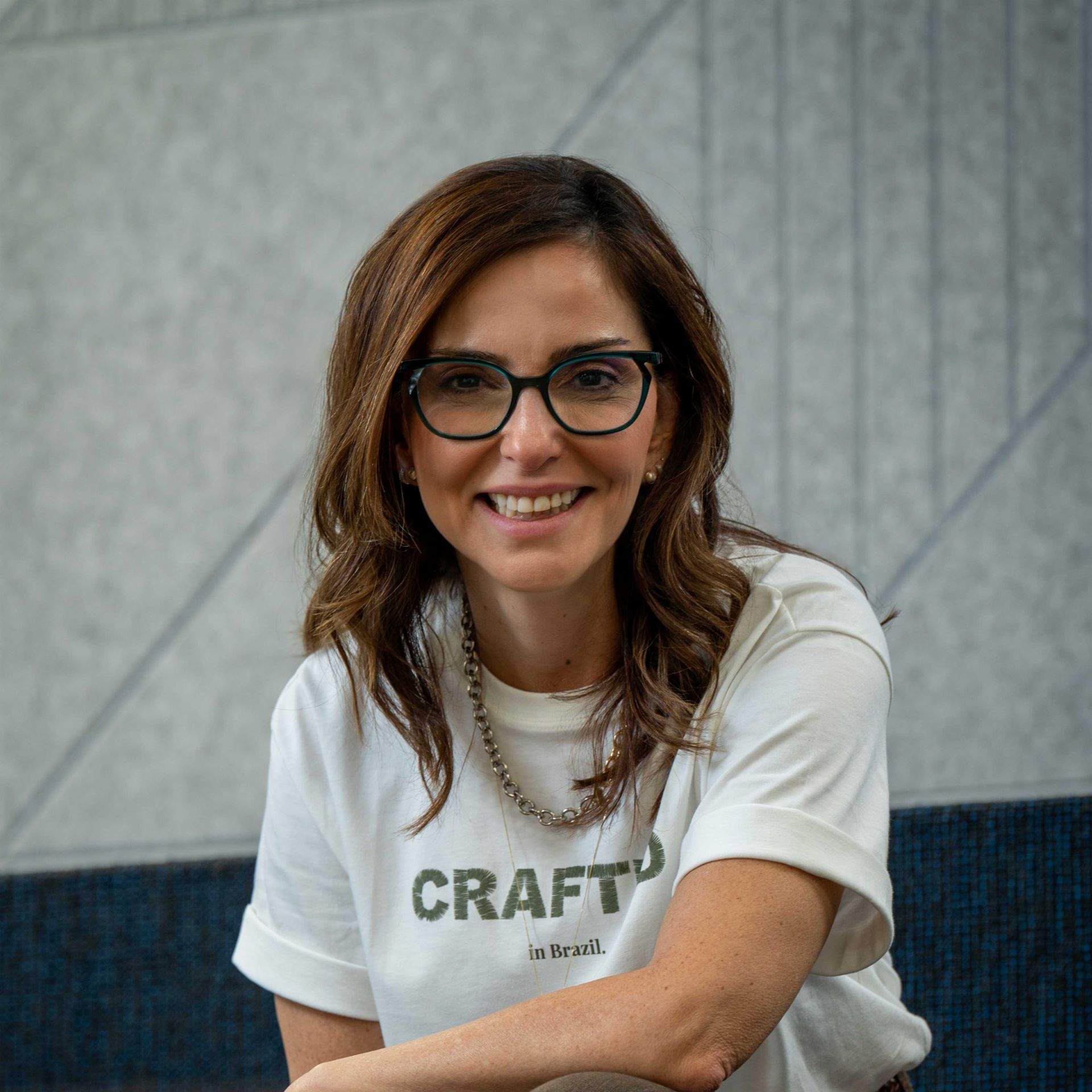
For Patricia Acioli, Head of Corporate Communications and Sustainability at Scania Brazil, sustainability is more than just business – it’s her passion. In her role, she is responsible for major sustainability projects, supports the transition to more climate-friendly transportation, engages stakeholders, and actively reports on progress. She is convinced that sustainability only works when it is embedded in business strategy, not bolted onto it. In her more than eleven years at Scania, she has shaped an understanding of sustainability that reaches far beyond environmental targets and puts people at its center.
Her approach has been shaped by an unlikely starting point: journalism.
The instinct to listen before acting, to ask one more question, to look for what is not being said: these are the tools she has carried from the newsroom into the boardroom.
Since 2020 you have been leading Scania Brazil’s social impact agenda, could you describe shortly, what the main goals of this agenda are?
To give you the broader picture: Acting in a responsible, ethical, and transparent way is part of Scania’s purpose to lead the transformation to a more sustainable transport system. Within our Corporate Social Responsibility, Social Impact serves as a central pillar that guides us to contribute to a better world – and we do this by focusing on very concrete strategic pillars: providing education and skills, securing health and safety within the transport sector, and acting as a 'Great Local Player' to create value for our communities. In this sense, social impact is not an accessory; it is foundation and gives coherence to the purpose of Scania.
That includes working with a community living near the factory in São Bernardo do Campo. What exactly did you do there?
We approached the community with a long-term perspective, focusing on building trust and creating lasting value together.
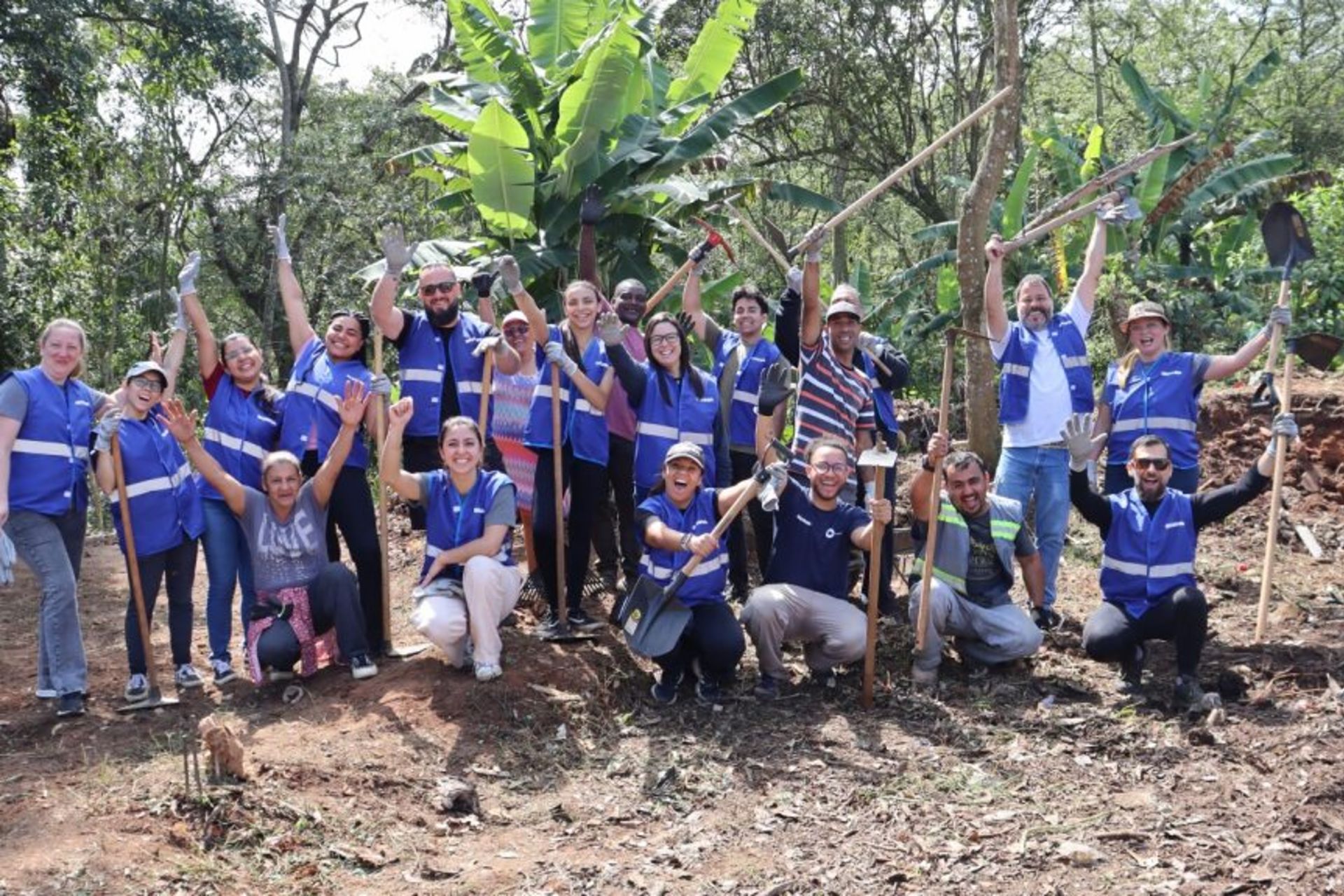
One of our first initiatives, developed in partnership with local organizations, introduced a technology that converts organic waste into biogas. Drawing on Scania's expertise in renewable fuels, we helped the community produce biogas for household use. In Brazil, cooking gas can represent a significant expense for many families, so this solution not only reduced household costs but also demonstrated that technologies developed for sustainable transport can create value in people's everyday lives.
From there, the relationship continued to grow. Working closely with the community, we co-created new initiatives to improve quality of life, including a community garden, educational programs for young students, nature conservation projects, and even the production of furniture made from recycled PET.
Our commitment has always been long term. We believe meaningful social impact starts with listening and starting a dialogue – that conversation became the foundation for every initiative that followed. We don’t perceive isolated projects, but as a long-term partnership built on trust, local needs, and shared value.
One might wonder: What does a commercial vehicle manufacturer have to do with all this?
I would say, a great deal. Our corporate purpose is Driving the Shift – driving the transition towards a sustainable transport system. For us, however, sustainability is about much more than reducing emissions; it also means taking responsibility for the positive social impact we create. We believe the energy transition must also be a just transition. Today, a company's success is no longer measured by financial performance alone, but also by the social and environmental value it creates.
You also launched a series of events called “Sustainable Talks” to open the sustainability conversation outside Scania. What came out of it?
We created a space to shift the mindset from competition to collaboration. Our strategy was to bring together the partnerships needed to enable the energy transition. Developing and manufacturing new technologies alone will not make decarbonization a reality. Success depends on collaboration across the entire ecosystem. That is why our focus was to engage companies, policymakers, academia, and other stakeholders around a common message: we cannot continue doing business the way we always have. The outcome has been extremely rewarding. Today, there is a much broader understanding that the transition depends on a set of enabling conditions – not just technology, but also infrastructure, regulation, renewable fuels, financing, and collaboration. Of course, someone has to take the first step. That's how transformation happens. The transition requires both push and pull: companies willing to innovate and invest, and an ecosystem capable of creating the conditions for change. Looking back, one of the greatest achievements has been building a shared understanding of the conditions needed to accelerate the transition.
This year is the tenth anniversary of Queen of the Road — an initiative you created to recognize and champion women in the transport industry. What has that journey looked like?
Queen of the Road has become a platform for dialogue and exchange, bringing together Scania leaders, customers from across the transport and logistics ecosystem, and women leaders from many other industries.
Ten years ago, the conversation was largely about empowerment. Today, it has evolved into something even broader: creating an environment where women are encouraged to speak up, lead with confidence, and shape the future of the industry.
We are very proud to have helped pave the way for other companies to launch similar initiatives and to recognize that diversity and inclusion are not only essential for business success – they are fundamentally about people.
This is not a conversation for women alone. It is a conversation that belongs to both women and men, because building a more inclusive industry is a shared responsibility.
The fact that Queen has reached its tenth anniversary demonstrates its relevance and lasting impact.
Women have always been part of the transportation industry. The difference is that, until recently, their contributions were not always visible or valued as they should have been.
How has your background in journalism influenced the way you lead today?
Business is often about what lies between the lines – what isn't written and what isn't said. Learning to pay attention to those signals creates value.
Journalism taught me the importance of staying connected to people. Journalists spend time in the field. They listen, observe, challenge assumptions, and understand different perspectives. They don't just report facts – they provide context and help people make sense of what is happening.
I've tried to bring that mindset into business. To understand the facts, put them into context, and focus on solutions. Because, in the end, every business is also a story that needs to be told – and a strategy that needs to be put into action.
One of the risks of the corporate world, especially as you move into leadership positions, is becoming disconnected from the outside world. For me, that's dangerous. Leadership isn't about sitting further away from reality; it's about staying close to people, understanding their needs, connecting with their humanity, and creating value together.
Leadership isn't about sitting further away from reality; it's about staying close to people, understanding their needs.
Patricia AcioliHead of Corporate Relations and Sustainability Management at Scania Brazil
What advice would you give to colleagues who want to create positive impact through their own work?
People often think strategy is about making bold moves. I've learned to appreciate the power of small, consistent steps. Vision matters. Strategy matters. But if I had to highlight one capability, it would be execution – the ability to turn ideas into reality.
That means being willing to try things that haven't been done before. It means being comfortable making decisions and taking calculated risks, even when you don't have all the answers.
I've never believed in waiting for the perfect solution. I rarely get things right the first time. I take the first step, learn along the way, improve, and keep moving forward.
If I had to name my greatest strength, I would say it's resilience – the ability to find a way forward when there seems to be no way. Curiosity, courage, and a genuine willingness to listen are qualities I value deeply because they create the conditions for learning, collaboration, and innovation.
Ultimately, meaningful change doesn't happen through grand gestures. It happens when people are willing to take action, learn continuously, and bring others along. That's also very much aligned with our leadership philosophy at Scania.
Which learnings or best practices can we transfer from your experience into the TRATON GROUP?
Being part of TRATON gives us a unique opportunity to learn from the strengths of each brand and collaborate across the Group. We regularly exchange knowledge, benchmark initiatives, and share best practices.
For example, Fredrik Nilzen, Scania's Head of Sustainability, participates in Group-level sustainability forums, helping to connect experiences and accelerate learning across the organization. In Brazil, we also work closely with Priscila Rocha, Head of Sustainability at Volkswagen Truck & Bus, to exchange ideas and identify opportunities for collaboration.
One of the greatest advantages of being part of TRATON is the diversity of perspectives. Different markets face different realities, and that allows us to learn from a wide range of approaches to both transport decarbonization and a just transition.
Climate change is a complex, systemic challenge that no company can solve alone. Being part of a strong industrial group like TRATON enables us to combine knowledge, scale, and collaboration to accelerate the transition towards a more sustainable transport system.
About
Today, success is no longer measured by financial performance alone, but also by the social and environmental impact a company generates.
Patricia Acioli joined Scania more than eleven years ago, working within activities connected to change management, corporate relations, communications, employee engagement, innovation, and ESG. Since 2020, she has led Scania Brazil’s social impact agenda.
Patricia is Head of Corporate Communications and Sustainability at Scania Industrial Operations in Brazil. She describes herself as a “solutions activist”, passionate about finding pathways for a more sustainable world.
In 2025, she received Scania's internal Eva Nyström Scholarship for outstanding achievements in innovation and sustainability.