
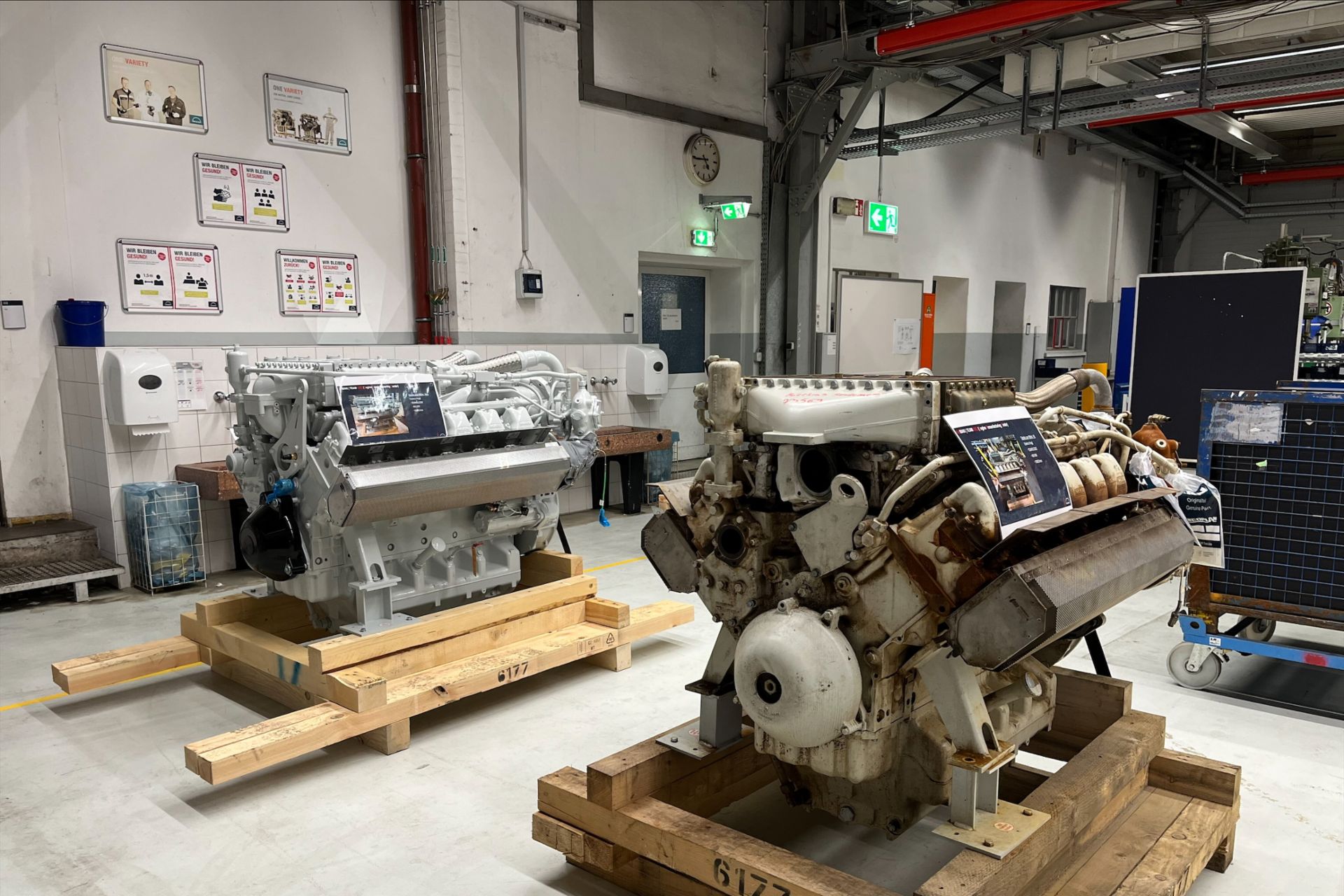
“Remanufacturing is quite simple,” Vanessa Reinarz explains. “We take the old broken parts back, clean it, replace the critical elements and give it a second life.”
What sounds simple in concept, is harder in practice – and more challenging still to build into a Group-wide business strategy across four brands and three continents. But that is precisely what Reinarz is attempting. As Head of Product Management Genuine Parts at MAN Truck & Bus, she has spent the better part of a decade building remanufacturing from a greenfield product line into a core commercial proposition. Now, as the lead of TRATON GROUP’s Reman and Beyond initiative, she is pushing even further: not just growing MAN’s Ecoline range but weaving circular thinking into the DNA of the entire Group.
The results are already tangible. MAN is now remanufacturing flywheels for Scania at a lower cost than Scania’s previous external supplier. Customers with ageing trucks are choosing a remanufactured engine over a new vehicle. And a cross-brand team of engineers, logistics specialists, and product managers is meeting weekly to find the next component that can be given a second life.
You’ve been with MAN for more than ten years now. How did you come into the company and this field?
I joined MAN in 2014, after working for an international company in Switzerland. I began in sales and aftersales controlling, working a lot with data and figures.
And for me, it was great to come back to the roots, back to the automative industry, especially in Munich again, and in the field of heavy duty trucks, which was completely new to me, and which is a B2B business, and that was really what motivated me to change to MAN.
Moving into Product Management later on really opened the door to remanufacturing and sustainability topics.
For someone unfamiliar with the topic: what is the value of remanufacturing?
It’s quite simple. Instead of producing a completely new component, we take the old part back – from customers or workshops – clean it, replace critical elements, and give it a second life with quality as good as new. By doing that, we save raw materials, energy, and emissions, while offering a reliable product that brings the same customer value as a new one.
The remanufactured part can even be better than new?
Yes. Because we see all the broken cores coming back, we recognize recurring failure patterns. Then we can improve them in the remanufacturing process – for example, replacing a plastic O‑ring with an aluminum one. In those cases, the reman part can last longer than the original.
What makes remanufacturing a strong business case for customers and for MAN?
Besides the sustainability aspect, it is a price‑attractive alternative. A remanufactured part can be up to 30% cheaper than a new one – with the same warranty and quality. For customers with older vehicles, this can make a crucial difference. If an engine breaks, the decision might be between buying a new truck or choosing a remanufactured engine. If we offer a reman engine that fits the value of the vehicle, the decision becomes easy and the truck stays on the road.
You are now leading a Group-wide initiative for remanufacturing across the TRATON brands. What is the ambition behind this?
The goal is to scale remanufacturing across the entire Group and explore new circular services. We call it “Reman and Beyond”. We want to combine capacities, resources, and knowledge from all brands to build something bigger and create a truly competitive offering for our customers.
It’s about growing the business while decoupling resource use and positioning TRATON as a sustainable provider of remanufactured and circular solutions.
How does this collaboration work in practice?
We started around two years ago with regular knowledge‑sharing meetings. Today, we work in structured project sprints with weekly sessions and dedicated work packages.
Each package has representatives from all brands: MAN, Scania, International, and Volkswagen Truck & Bus (VWTB) – from commercial departments, production, logistics, purchasing, and R&D.
And what is amazing is the commitment from all participants, because everybody is aware how it is possible to grow from a brand perspective, but also on a TRATON level, and to learn from each other.
Can you give an example?
During a joint workshop at our reman facility in Nuremberg, someone from Scania asked whether MAN could remanufacture certain flywheels for them. We said yes, and today MAN is remanufacturing those flywheels at lower cost than Scania’s previous supplier. It’s a real win‑win and one of the first tangible outcomes of the collaboration.
And we also learn from Scania: for example, they have strong capabilities in dismantling complete vehicles and feeding components back into the reman process.
How do other TRATON brands fit into this exchange?
International has more than 60 years of experience and the largest reman portfolio in the Group, so there’s a lot we can learn from their processes. VWTB is newer to remanufacturing and very curious about our methods, products, and suppliers. Each brand contributes in different ways, whether through physical capabilities, processes, or shared supplier strategies.
What motivates you personally to drive circularity and remanufacturing forward?
For me, it’s the combination of sustainability and business impact. Remanufacturing shows that circularity is not a compromise. It’s a competitive advantage. It lowers emissions, saves resources, creates customer value, and brings profit to the company. That combination is what motivates me.
Looking ahead, what is your vision for remanufacturing at MAN and within the TRATON GROUP?
My vision is that remanufacturing and other circular services are fully integrated into our strategies and roadmaps. That it is not seen as an option but a deliberate choice. I also see a Group-wide solution where all four brands participate, look in the same direction, and follow a shared roadmap so we can truly scale the business together. And for me, it’s essential that remanufacturing and other circular services become part of product design and service concepts right from the beginning – as a complete solution.


