Disclaimer: This page and the documents, information, data and assessments contained herein reflect the factual and legal status as well as the corporate strategy at the time of their publication and/or for the time period specified. They may since have become outdated as they are not being updated.
In hardly any other commercial vehicle segment is the shift to electric as advanced as in bus transport. But it is not moving at the same pace everywhere: segment, region, and duty cycle determine how quickly the switch to electric drive progresses. A look at the market dynamics shows what matters now, and how the TRATON GROUP is preparing for it.
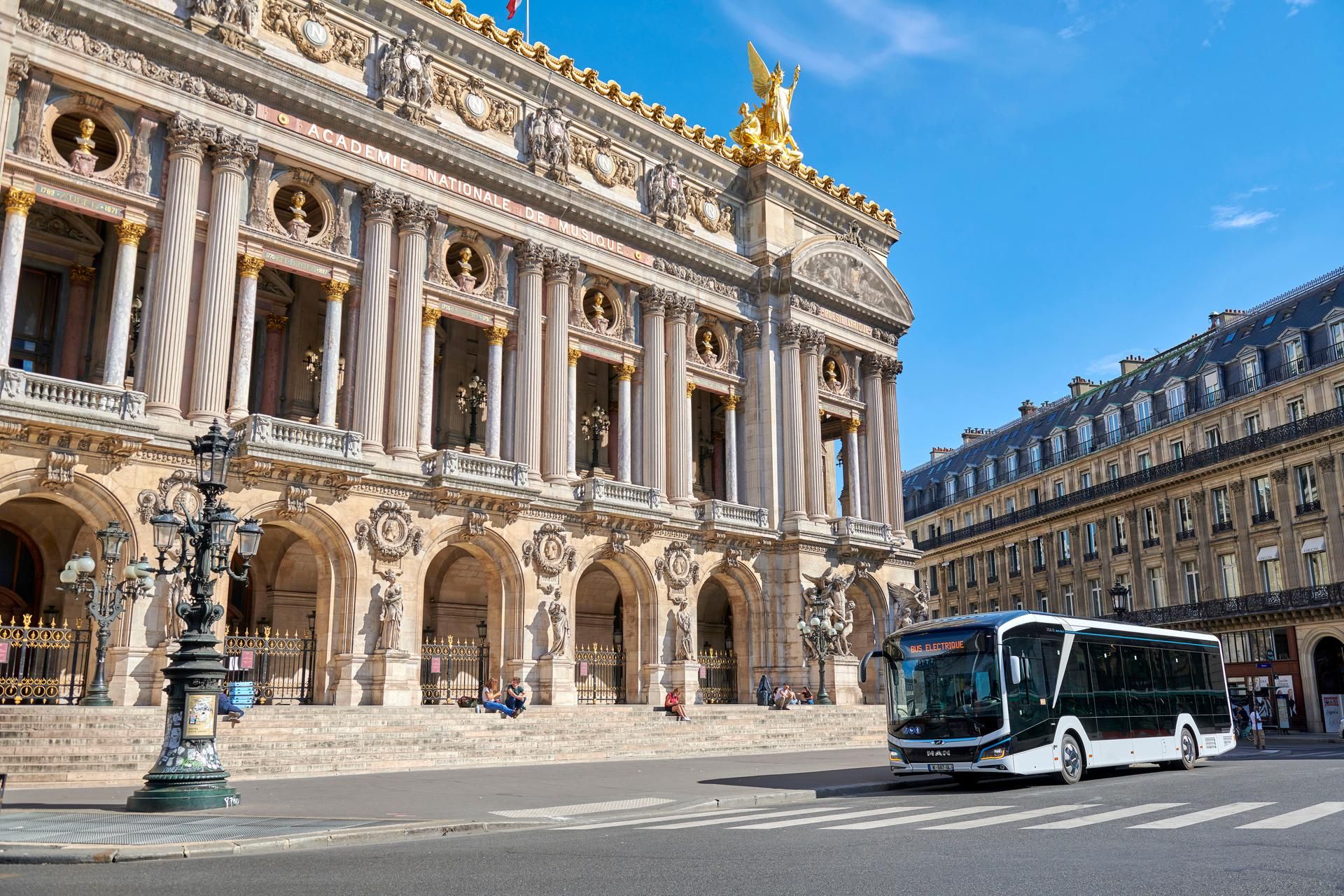
Anyone boarding a bus in a European city today is riding electric more and more often. While electrification is still gathering pace for cars and trucks, it has long been part of everyday life in urban bus transport in many places. “When it comes to electromobility, the bus is leading the way,” says Carl-Johan Lööf, who heads Solution Strategy at Scania. “Electrification started early here, and the market is mature.” In Europe, according to Lööf, more than 60 percent of all newly registered city buses are already electrically powered today.
In Europe, more than 60%
of new city buses are electrically powered today, according to Lööf
The TRATON GROUP now offers an electric solution in every bus segment — the result of many years of development work by its brands. The decisive question is therefore no longer whether the electric drive works, but how quickly it will catch on in the remaining bus segments and regions of the world.
City bus: the transition is settled
In urban transport, the transition is all but settled, driven by regulation and demand alike. The EU’s revised CO₂ requirements stipulate that by 2030, nine out of ten newly registered city buses must be zero-emission. From 2035, all of them must meet this requirement. But it is not only legal pressure that is giving the market a tailwind. “Regulation is accelerating the switch. The decisive factor, however, is that we see a clear willingness among our customers to embrace electromobility,” says Heinz Kiess, who is responsible for product marketing for buses at MAN. “Quieter operation in urban areas, subsidy programs, and the experience that the vehicles run reliably in everyday service have given eBus sales an additional boost.”
Quieter operation in urban areas, subsidy programs, and the experience that the vehicles run reliably in everyday service have given eBus sales an additional boost.
Heinz KiessHead of Product Marketing BusMAN
TRATON’s internal forecasts therefore expect the share of battery-electric city buses in Europe to rise to around 94 percent by 2030. The real challenge thus no longer lies in the vehicle, but in the expansion of the charging infrastructure — and in the very different pace of individual countries in this respect.
Intercity and coach: the next growth area
Outside urban transport, things become considerably more demanding technically. The intercity segment, too, is now considered electrifiable, and low-entry vehicles enable electric scheduled services between smaller towns. For the coach, by contrast, operators think in cents per kilometer. When the total cost over the vehicle’s lifetime draws level with that of a diesel bus depends on the duty cycle, energy prices, and subsidies.
45% by 2030 and 65% emmisions reduction by 2035:
these are the EU’s CO₂ targets for coaches
Here, too, regulation sets the direction: the EU’s CO₂ targets for coaches provide for 45 percent lower emissions by 2030 and 65 percent by 2035, in each case compared with the 2019/20 reference period. According to Group forecasts, the share of battery-electric coaches in Europe could stand at around 30 percent by 2030 and, including intercity buses, rise to up to 60 percent by 2035. But the shift could achieve more than just a reduction in emissions. Electric coaches could also attract new passengers. “When the entire travel chain commits to decarbonization, we can appeal to a whole new target group in tourism,” says Kiess. The coach could thus become an important growth area in the years ahead.
Different speeds around the globe
As clear as the trend is in Europe, on a global scale electrification is anything but uniform. Demand for city buses is picking up worldwide, but at different speeds: while Europe is likely to run almost entirely electric by 2030, forecasts for the Middle East, the United States, and Latin America — depending on the country — reach up to 30 percent in a scenario with a faster ramp-up. For coaches, the gap is even wider, and outside Europe diesel will remain the first choice in many places for years to come. “In Europe, we update our offering continuously — in Latin America, electrification in urban transport is only just arriving,” says Lööf.
In Europe, we update our offering continuously — in Latin America, electrification in urban transport is only just arriving.
Carl-Johan LööfHead of Solution StrategyScania
This is exactly what the TRATON GROUP is prepared for. Across its brands, it serves markets at very different levels of maturity — from the European city bus to the city bus in Latin America and the school bus in North America, all the way to chassis solutions for local bodybuilders in Africa and Asia. In an increasingly dynamic competitive environment, the Group sets itself apart less on price than on service, quality, and customer proximity. For the coach in particular, which travels right across Europe, the availability of service and spare parts determines profitability.
The fact that not every market is yet ready for the fully electric drive is not a gap for the TRATON GROUP, but an opportunity: transition solutions are meant to ease the switch. One example is Scania’s plug-in hybrid coach. It combines a combustion engine and an electric drive and can run up to 70 kilometers purely electrically, in low-emission zones, for instance; the diesel engine covers the rest of the route. That way it can also be used where the charging infrastructure is not yet fully developed.
Charging: the real bottleneck
When electric buses reach their limits somewhere in the world, it is often because of the infrastructure. For the city bus, overnight depot charging is standard today. For routes with tight timetables, opportunity charging at the terminal stops is added. For operators, this shifts the real planning task: away from the range of the bus and toward the question of when, where, and how fast to charge. The vehicle manufacturer is thus increasingly becoming a solutions provider. What is needed is a complete package, from route simulation and the layout of the charging points to support in day-to-day operation.
We are investing in battery technology, because battery-electric vehicles are the technology of the future — each step lowers costs and extends service life.
Birol KilincExpert Technology StrategyTRATON
Meanwhile, the technology on the inside keeps evolving. “We are investing in battery technology, because battery-electric vehicles are the technology of the future — each step lowers costs and extends service life,” says Birol Kilinc, who is responsible for the vehicle portfolio in the bus segment at TRATON. Because market requirements are constantly changing, the TRATON GROUP sees its electric portfolio not as a finished offering but as something that is optimized on a regular basis. The shared technological base across the brands makes it possible for improvements to reach customers quickly and across several segments.
Electromobility has arrived in bus transport
The market is sending a clear signal: the technology works, demand is growing, and for the city bus the shift to electric is already decided. “The real question is how quickly the other segments and regions of the world will follow,” says Kilinc. A look across segments and continents shows that the path to electromobility is not a straight line, but a race run at different speeds. For a group that is present in every segment and around the world, that is precisely the central task: to have the right offering ready for every market.