Disclaimer: This page and the documents, information, data and assessments contained herein reflect the factual and legal status as well as the corporate strategy at the time of their publication and/or for the time period specified. They may since have become outdated as they are not being updated.
At TRATON, sustainability is a shared purpose.
Impact Lines reveals how TRATON’s people bring this purpose to life, turning sustainability goals into tangible impact across every brand, every system and every line of work.
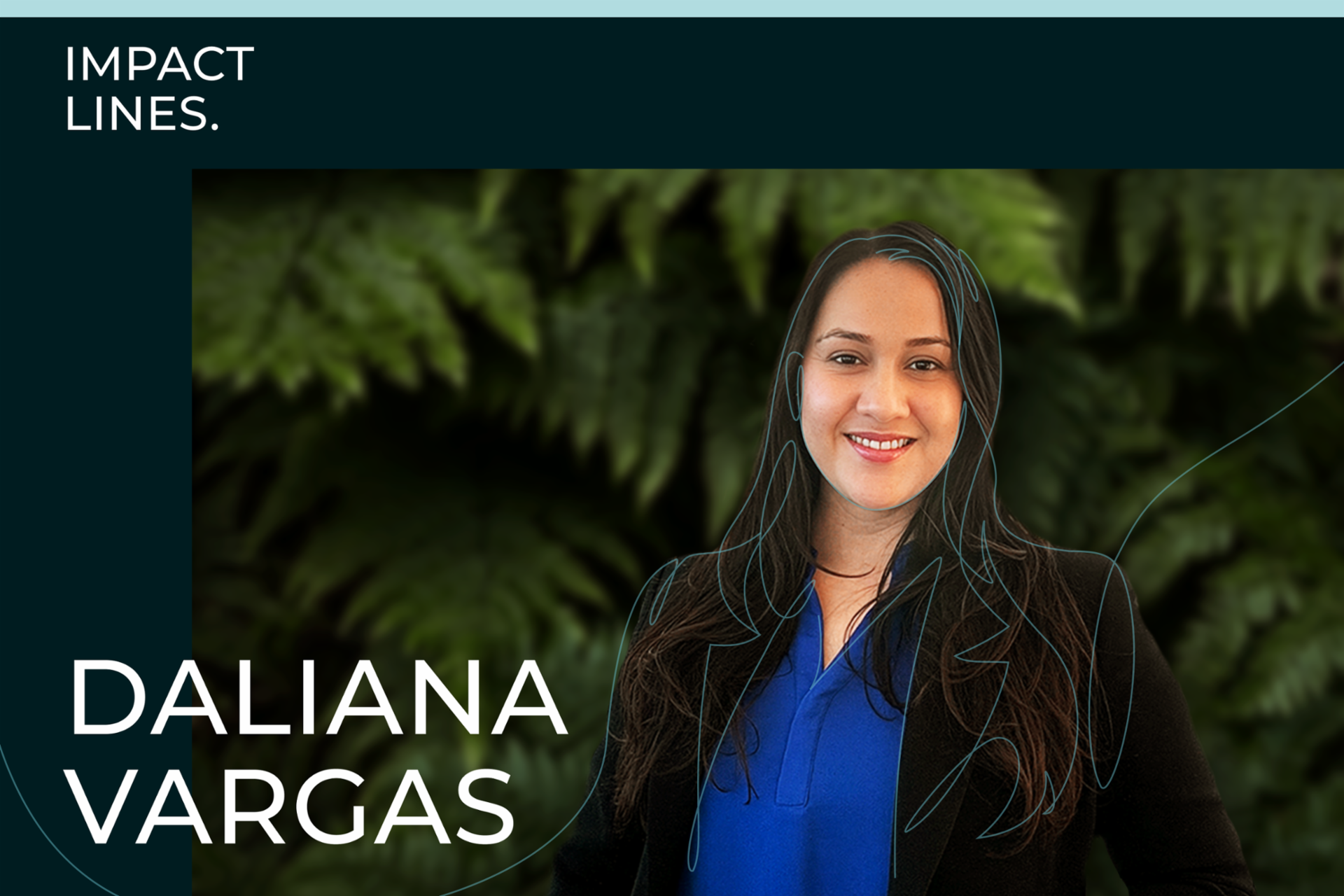
With a background that bridges biology, data, and heavy-duty transport, Daliana Vargas has built a career defined by curiosity, adaptability, and impact. Now part of International’s Office of the Environment and Sustainability Compliance team, she helps tackle TRATON’s most complex challenges: cutting emissions, advancing circularity, and improving human rights across the supply chain. Whether touring steel mills to understand decarbonization at the source or partnering on electric vehicle (EV) battery reuse, Dali brings a scientist’s curiosity and a strategist’s focus. In this conversation, she reflects on the chemistry of change, the power of persistence, and why inspiring others matters just as much as the data.
How did you first come to work at International?
My path wasn’t exactly typical. I pursued studies in biology followed by graduate work in applied statistics. When I was job hunting, Navistar (now International Motors) had a strong presence in my community. One day, a recruiter contacted me about an opportunity that turned out to be for the Global Truck and Bus Procurement joint venture. This was the procurement joint venture between TRATON Group and International prior to the merger. I began as a data analyst, collecting data from International and preparing Request for Quotations (RFQs) to promote alignment and foster synergies among the brands.
What was it like working in the Global Truck and Bus Procurement joint venture?
It was intense, like boot camp. There were a variety of projects and colleagues from across the brands, each with their own style. I learned a lot and eventually rotated into the line organization, working in procurement. I progressed from a data analyst to a sourcing manager, leading negotiations and managing commodities like wire harnesses and battery cables.
What key experiences shaped your career path at International and what motivated you to focus on sustainability?
I joined International right as COVID hit. Suddenly, we were dealing with supply chain shortages and trying to keep production running from home. It was a crash course in crisis management. Later, I transitioned to the International Used Truck Organization. I worked on pricing for trade-in vehicles and tracked residual value. That’s when I started seeing the long-term impact of the parts we sourced. Some of those vehicles were coming back three to four years later.
Seeing those vehicles return made me reflect: Did I ask the right questions when sourcing? Was I thinking long-term? I realized I wanted to make a bigger impact, so I reached out to a colleague who had just started the sustainability team in procurement. I joined her team on January 1, 2024, and have been working in sustainability ever since.
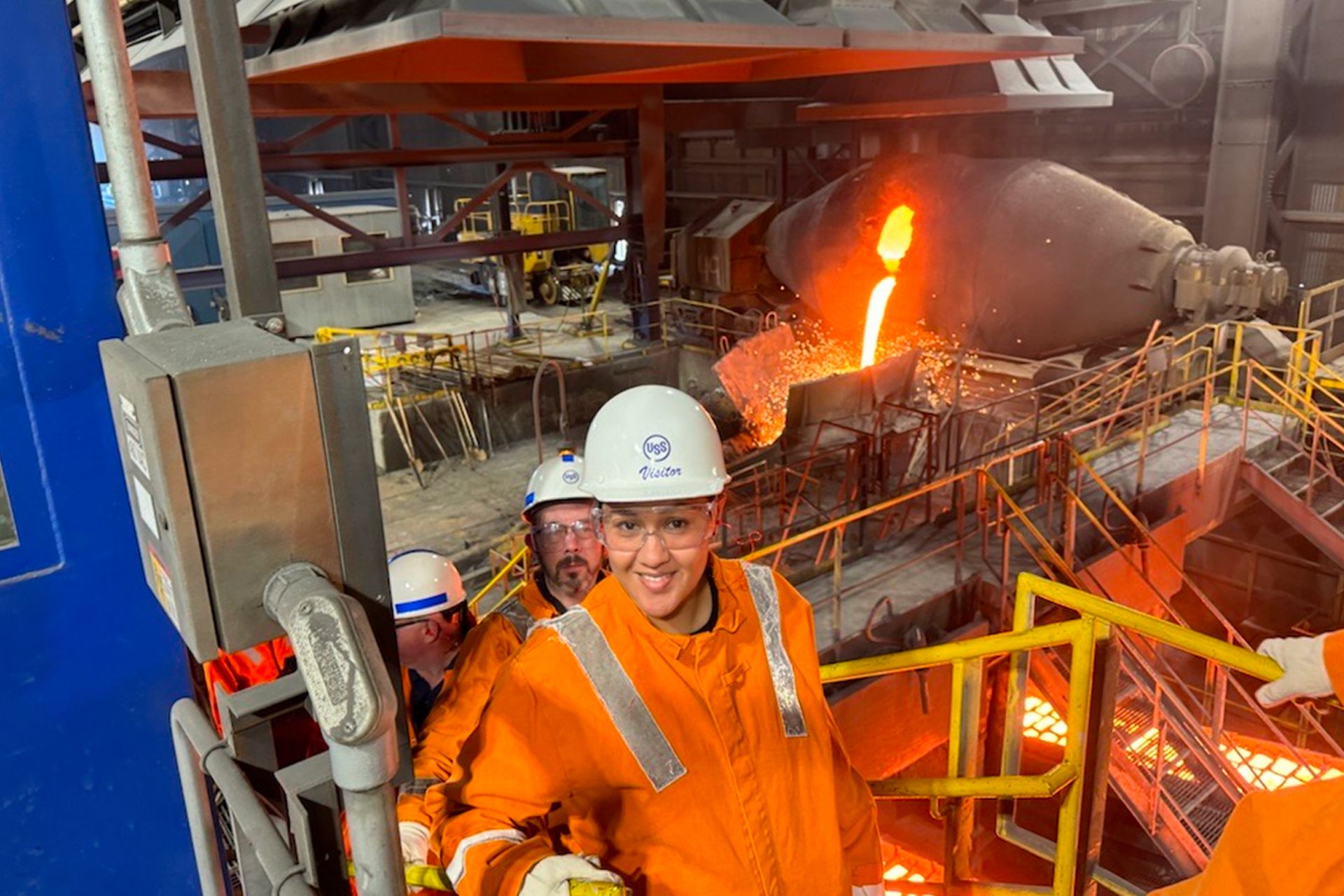
Daliana Vargas tours a steel plant as molten iron is poured during casting.
What does your role in sustainability focus on?
I work across TRATON’s three joint impact areas: decarbonization, circularity, and human rights. One of my primary focus area is Scope 3 emissions – specifically the emissions generated across our value chain from purchased goods like steel.
Let’s start with decarbonization – what does that involve in practice?
I focused on learning as much as I could in my first year: meeting with our commodities team, visiting steel mills across the Midwest, and understanding the difference between a blast furnace and an electric arc furnace. Walking through those facilities is mind-blowing; the scale is hard to capture, even in videos. Connecting that experience back to chemistry and emissions data was fascinating. Now, we’re collecting emissions intensity factors from suppliers, testing competitors, and laying the groundwork for strategic sourcing decisions. Each mill has its own roadmap for reducing emissions, and we need to ensure it aligns with ours. It’s a lot of groundwork, but it’s exciting because these decisions will shape the future.
And circularity – how does that come into play?
We focus on remanufacturing first, especially with EV batteries. I work closely with our chief engineer who works with a company called “Renewance”. Instead of recycling, which often means grinding batteries into black mass, first and foremost we try to repurpose and remanufacture. Sometimes only one cell needs replacing, so why discard the rest? We’ve also been collaborating with Porsche and Audi in North America to find unified recycling solutions that go beyond black mass.
You define human rights as the third pillar in your sustainability work. What does this look like?
This is a serious area. I’m a grievance case manager, addressing supplier compliance issues related to fair working conditions, ethical practices, and environmental policies. This includes investigating concerns raised through our grievance system.
Each case is different. Depending on the type of case as a team we consider actions such as collaborating with suppliers to improve standards where possible. In other instances, the recommendation may be to exit a supplier.
How do you stay motivated when progress can be slow?
My work in sustainability is long term and to make a real impact, it’s a good to have a balance of multiple projects. For example, the commodities team may have a sourcing coming up for a material that is a large source of emissions. Choosing a supplier with plans for lower emissions intensity has the potential to make a big impact. Integrating emissions data with the sourcing decision process takes time. The first step is collecting baseline data which may seem like a small win. However, these small wins create awareness. Then next time the team sources, they’re already asking those sustainability questions before I even join the conversation. This is when it becomes the norm. So, I don’t feel like I have to do everything by myself. These projects add up, and collective actions make a greater impact.
Each person can make an impact. For me, it’s about building a collective of people who care.
Daliana VargasSustainability ManagerInternational
When I began my academic and professional career, I didn’t even consider sustainability as a potential career path. Now, I make sure others know – whether it’s with my interns or even my daughter’s class. She knows what I do, and so do her classmates because I’ve visited their school. These conversations matter. They create awareness that there are multiple professional paths within sustainability, and that each person can make an impact. For me, it’s about building a collective of people who care. Once you have that in place, it’ll absolutely add up.